

Predictive Operational Integrity for High-Stakes Aviation Ecosystems
We stabilise volatile aviation operations by eliminating the friction between structural system design and human execution.
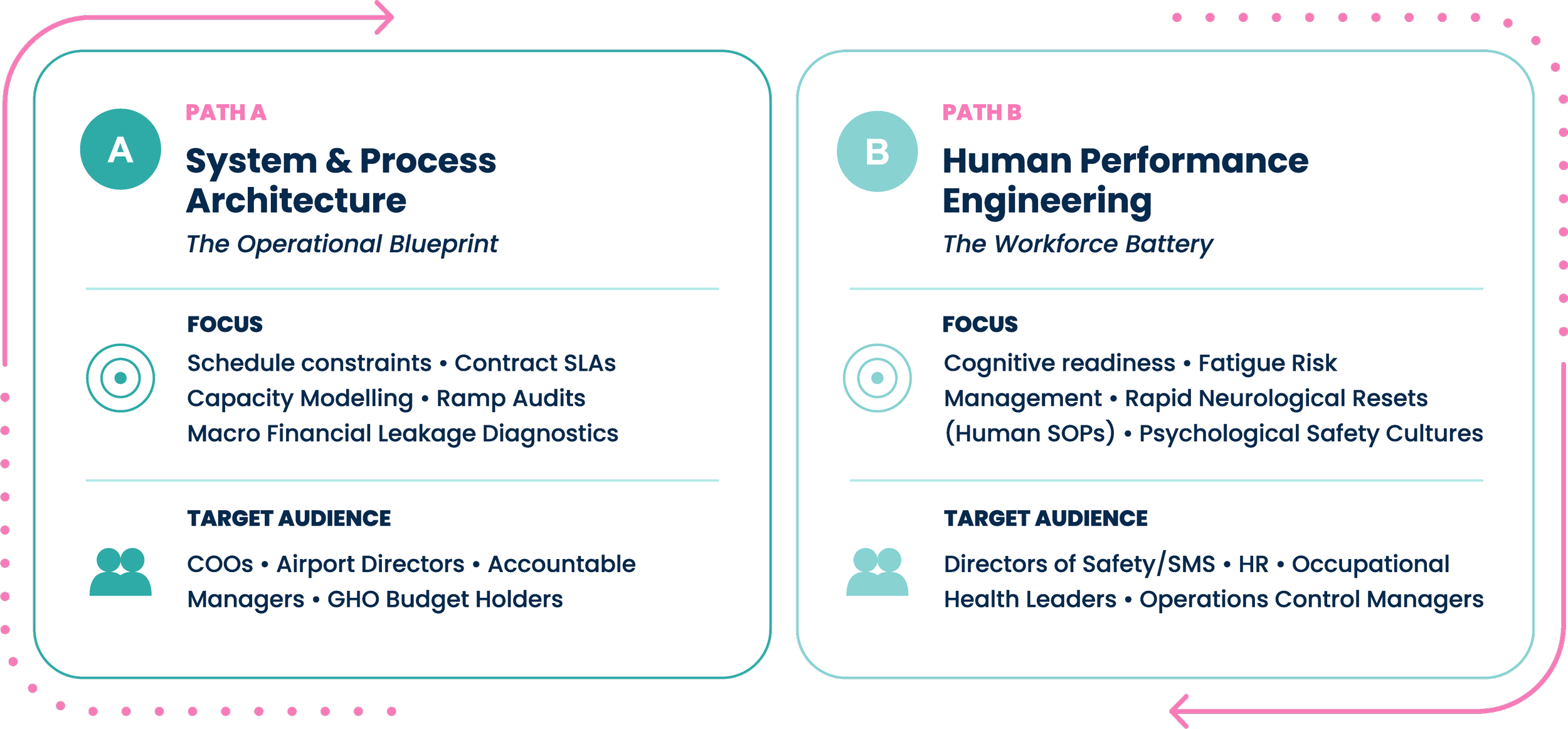
True operational resilience requires both a system engineered for success and an entire multi-disciplinary workforce capable of cognitively executing it.
Operational integrity cannot exist in silos. Yet ground operations and maintenance still lag far behind the mature safety cultures of ATC and flight operations with their regulation Flight Time Limitations (FTL) and FRMS (Fatigue Risk Management Systems).
We bridge the gap between systemic architecture and human execution across airlines, airports, cargo operations and ground handling organisations.
The Cost of Looking Backwards
Most aviation executives measure operational health retrospectively, relying on lagging indicators like GSE/aircraft damage, OTP (On Time Performance), Lost Time Injuries (LTIs), CASK (Cost per available Seat Kilometre), insurance claims and quarterly financial performance.
By the time these metrics deteriorate, underlying system fragility such as invisible fatigue accumulation, ops control cognitive overload, roster compression or passenger service burnout have been building for weeks.
True resilience isn’t the ability to absorb shocks; it’s the organisational intelligence to anticipate and mitigate against them, through performance-based oversight.
Human‑factors metrics consistently lead operational, safety, and financial outcomes by 4-6 weeks because they capture the earliest signs of strain in your people and processes.
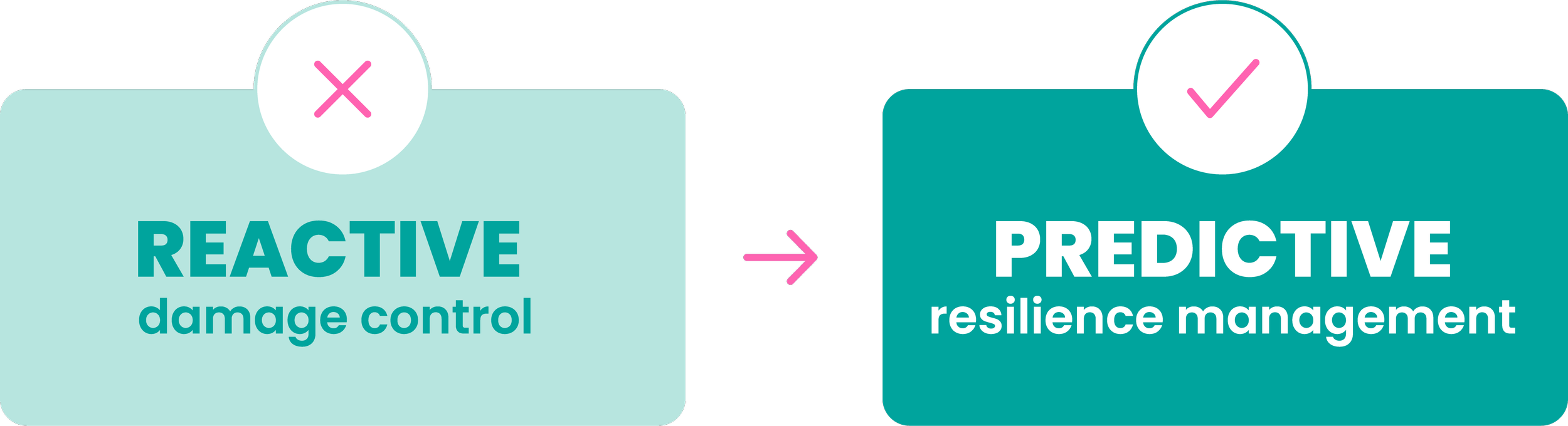
If you aren’t treating the human element as a core leading indicator, you’re not managing organisational health, you’re reacting to its failure.
The Clarity Resilience Review (CRR) turns disjointed operational signals into targeted, measurable resilience.
Rather than handing you another dashboard, the CRR isolates systemic friction and human factor risk within your operational ecosystem. We track operational drift, expose the root causes of recurring friction, and collaboratively engineer solutions that hold under real world pressure.
Data-led discovery: We interrogate telemetry across schedules, capacity constraints, micro-deviations and incident report data.
Front-line diagnostic: We map the gap between procedural design and the cognitive, physical and environmental realities of front-line execution.
Measurable stability: We implement practical operational adaptations and establish clear baseline indicators to assess long-term resilience.
Our Methodology:
The Clarity Resilience Review

UNDERSTAND: Human Factors & Systemic Architecture
We look beyond compliance checklists to diagnose real-world friction; evaluating cognitive readiness, fatigue load, procedural workarounds, attentional drift and cross-team interface friction.

IMPROVE: Co-Designed, Measurable Interventions
We partner directly with operational teams to engineer workflows and protocols that withstand live pressure; re-measuring operational signals to ensure lasting stability and inform proactive safety.